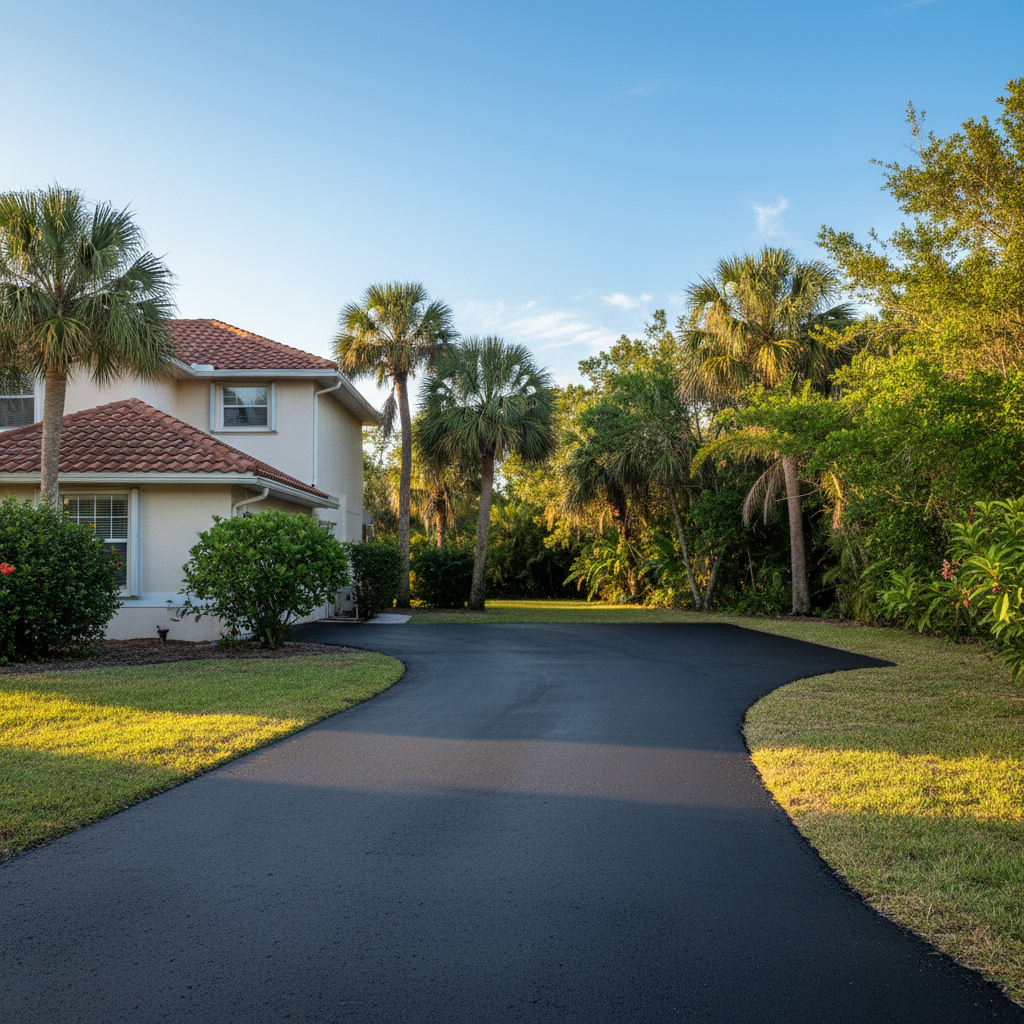
Ever wonder why your asphalt driveway here in St. James City seems to age faster than folks up north? It's not just your imagination, believe me. Our Southwest Florida climate, with its intense sun, heavy rains, and humidity, is a real challenge for asphalt. I've been doing this a long time, and I've seen firsthand what our weather does to pavements. Understanding these local conditions is absolutely key to keeping your driveway looking good and lasting longer.
How Our Climate Messes With Your Asphalt
Let's talk about the big players: sun, rain, and heat. The sun's UV rays are brutal, just tearing things up. They break down the asphalt binder, making it brittle and causing it to lose its flexibility. That's why you see those little aggregate stones starting to pop out, especially on older driveways. Then there's the heat. Asphalt expands when it's hot and contracts when it cools. While we don't get extreme cold, those daily temperature swings — particularly when a cold front pushes through in winter — can really stress things out. Over time, this constant movement leads to cracking.
And the rain? Oh, the rain. Our rainy season, from June through September, brings daily downpours that can be relentless. Water, once cracks appear, is asphalt's worst enemy. It seeps into those cracks, gets under the surface, and starts to erode the base layer. If you've got a low spot in your driveway, or if your property doesn't drain well, that standing water just makes everything worse. I've seen driveways in areas like the Monroe Canal neighborhood where poor drainage has absolutely destroyed sections of asphalt in just a few years.
When's the Best Time for Asphalt Work?
Timing is everything when it comes to asphalt. You can't just pave whenever you feel like it. The material needs specific conditions to cure properly and bond right. For major projects like new paving or overlays, I always recommend aiming for our drier, cooler months. That means roughly from November through April. During this period, we have lower humidity and less chance of pop-up thunderstorms ruining a fresh pour.
Why does that matter so much? If you pave when it's too hot and humid, the asphalt can stay soft for longer, making it more susceptible to rutting or damage from vehicles. If it rains shortly after paving, especially before it's had a chance to cool and set, it can affect the compaction and the overall integrity of the surface. For sealcoating, you need at least 24-48 hours of dry weather after application, and ideally, temperatures above 50°F. Trying to sealcoat in the middle of July is just asking for trouble with our afternoon storms, isn't it?
Weather Conditions That Really Affect the Job
Beyond the general season, specific daily weather conditions play a huge role. We're always watching the forecast like a hawk. Here's what we look for:
- Temperature: For paving, we need ambient temperatures to be consistently above 60°F, but not scorching hot, like over 95°F. If it's too cold, the asphalt cools too fast, making it hard to compact properly. Too hot, and it can be difficult to work with and cure correctly.
- Humidity: High humidity can slow down the curing process for sealcoats and other liquid applications. We definitely prefer lower humidity days for these types of jobs.
- Rain: This is the big one. You simply cannot pave or sealcoat in the rain. Water interferes with the bonding of the asphalt layers and can wash away fresh sealcoat. Even damp surfaces can cause issues. We need dry conditions, and a clear forecast for at least a day or two after the work is done.
- Wind: Strong winds can cause problems too, especially for sealcoating. It can dry the product too quickly, leading to an uneven finish, or blow debris onto the wet surface.
That's why sometimes we might have to reschedule. It's not because we don't want to get your job done; it's because we want to do it right, and Mother Nature doesn't always cooperate on our schedule.
Year-Round Protection for Your Investment
So, what can you do as a homeowner to protect your asphalt once it's down? A lot, actually. It's not just about getting it paved and forgetting about it.
- Regular Cleaning: Keep your driveway clean. Sweep off leaves, dirt, and debris. Organic matter can trap moisture and accelerate deterioration. Oil and gas spills should be cleaned up immediately as they dissolve the asphalt binder.
- Crack Sealing: This is probably the most important thing you can do. As soon as you see a crack, get it sealed. Don't wait. A small crack lets water in, and that water will turn into a pothole faster than you can say 'hurricane season.' This is a relatively inexpensive fix that saves you big money down the road.
- Sealcoating: For residential driveways, I usually recommend sealcoating every 2-3 years. This provides a protective layer against UV rays, water, and chemicals. It also restores the rich black color, making your driveway look new again. Just make sure it's done by professionals who know what they're doing, like us at Top Notch Asphalt Solutions.
- Drainage: Pay attention to your property's drainage. If water is pooling on your driveway, you've got a problem. Sometimes it's a simple fix, like adding a small swale or French drain. Other times, it might require regrading, but addressing drainage issues is crucial for asphalt longevity.
- Avoid Heavy Loads: Try not to park heavy trucks, RVs, or construction equipment on your residential driveway for extended periods. Asphalt is designed for typical car and light truck traffic. Heavy, static loads can cause depressions or cracking over time.
Look, your driveway is a significant investment in your home's curb appeal and functionality. Ignoring it just means you'll be paying more for repairs or replacement sooner. A little proactive maintenance goes a long way, especially with our unique St. James City weather. If you've got questions about your specific driveway, don't hesitate to give us a call. We're always happy to take a look.