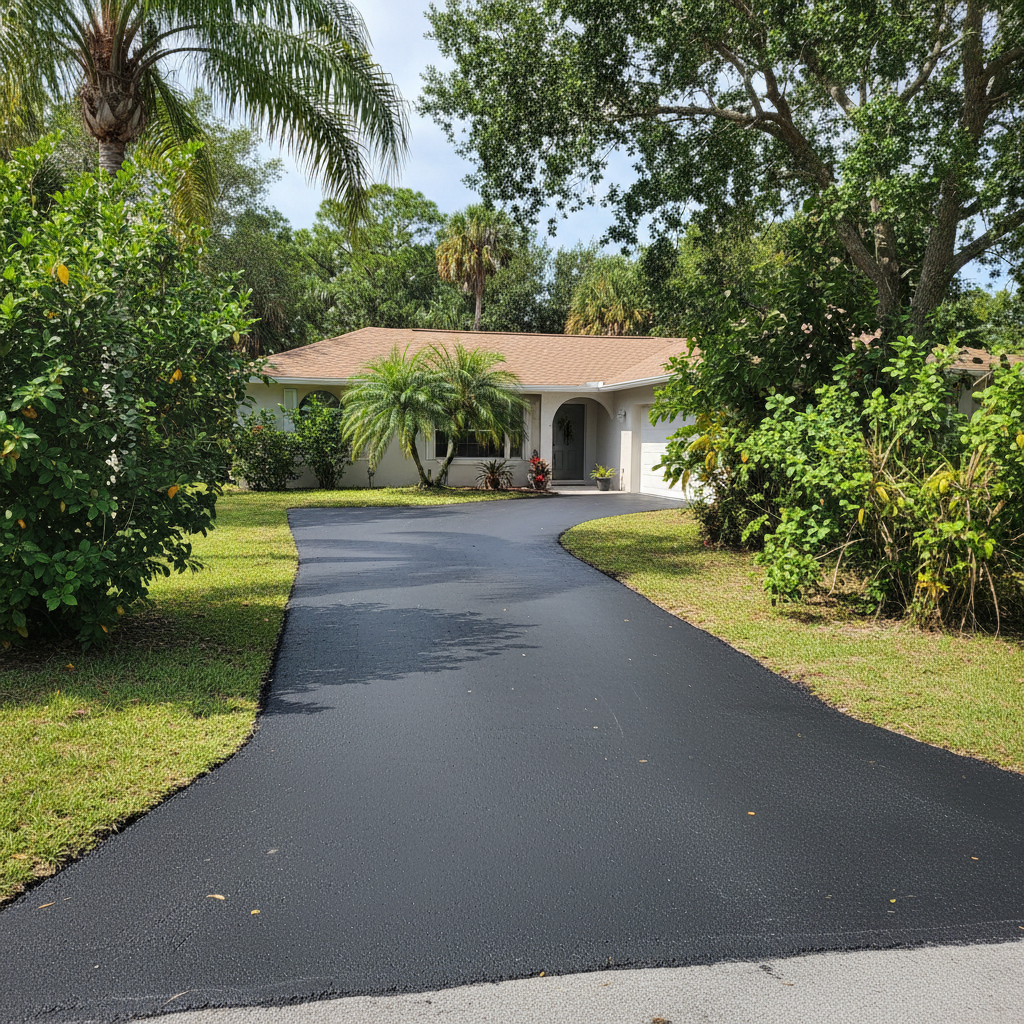
Alright, let's talk about driveway paving costs right here in St James City. It's one of the first things folks ask me, and honestly, it's a fair question. You want to know what you're getting into, and frankly, you deserve a straight answer. It's not just a simple square footage calculation, though that's a big part of it. A whole bunch of things can push the price up or down, and knowing them can save you some headaches—and some cash.
What Makes the Price Tag Go Up or Down?
When I put together a quote for you, I'm looking at several things. It's never just the asphalt itself, you know? Think of it like building a house; the foundation matters, the materials matter, and the labor matters.
- Size and Shape: This one's pretty obvious, right? A bigger driveway means more material and more labor. But also, a really curvy or oddly shaped driveway takes more time and precision than a simple rectangle. More cuts, more handwork, more effort goes into those.
- Existing Driveway Condition: Are we starting from scratch on a brand-new build, or are we tearing out an old, cracked-up concrete or asphalt mess? Full removal and proper sub-base preparation add significantly to the cost. If your old driveway is mostly sound, sometimes an overlay is an option, which is cheaper, but that's a whole different conversation we can have.
- Sub-Base Work: This is huge, especially around here. We've got a lot of sandy, sometimes mucky soil in parts of St James City, particularly closer to the canals. If your sub-base isn't stable, we can't just pave over it. We'll need to excavate, bring in good fill, compact it properly, and maybe even use geogrid. Skimping here means your new driveway won't last. It'll crack and sink, and you'll be calling me again in a few years for repairs, trust me.
- Material Thickness: How thick do you want the asphalt? A standard residential driveway might get 2-3 inches of asphalt over a well-prepared base. If you've got heavy RVs or commercial vehicles, we might recommend 3-4 inches or more, which means more material and, you guessed it, more cost.
- Drainage: Water is the enemy of any pavement. If your property has poor drainage, we might need to grade the area more aggressively, install catch basins, or create swales to direct water away. This prevents pooling and really extends the life of your driveway.
- Accessibility: Is your property easy to get to with heavy equipment? Tight turns, overhead wires, or limited space for trucks can add to the labor time.
Typical Cost Ranges You Can Expect
I get it, you want numbers. While every job is unique, I can give you some realistic ranges for asphalt paving here in St James City. These are rough estimates and assume a standard residential driveway, not some massive commercial lot.
- Basic Overlay (if suitable): If your existing asphalt is in decent shape and just needs a fresh top layer, you might be looking at $2.50 - $4.00 per square foot. This is the cheapest option, but it's not always viable.
- New Installation (no existing pavement, good sub-base): For a new asphalt driveway, starting from a clear, stable area, you're generally going to see prices in the range of $5.00 - $8.00 per square foot. This includes proper grading, a good aggregate base, and 2-3 inches of asphalt.
- Full Removal & Replacement (poor existing pavement/sub-base): This is the most involved and most expensive option. When we have to tear out an old driveway, excavate poor soil, bring in new base material, and then pave, you're probably looking at $8.00 - $12.00+ per square foot. This covers all the heavy lifting and material disposal.
So, for an average 1,000 square foot driveway, you could be looking anywhere from $5,000 for a straightforward new install to $12,000 or more for a complete tear-out and rebuild with extensive sub-base work.
What's Included in a Good Quote?
A detailed quote from Top Notch Asphalt Solutions, or any reputable contractor, shouldn't just be a single number. It should break down the work so you know exactly what you're paying for.
- Site Preparation: This covers excavation, grading, removal of debris, and any necessary sub-base work (like bringing in shell or limerock).
- Materials: The type and quantity of aggregate base, and the tonnage of asphalt mix.
- Labor: The crew's time for all phases of the project.
- Equipment: Cost of using pavers, rollers, excavators, etc.
- Permits: If required by the county or city, though for most residential driveways, they aren't.
- Cleanup: Hauling away old materials and leaving your property tidy.
- Warranty: What kind of guarantee they offer on their work.
How to Avoid Overpaying
Nobody wants to get ripped off. Here's my advice, plain and simple:
- Get Multiple Quotes: Don't just go with the first guy. Get at least three detailed quotes. This helps you compare apples to apples.
- Ask for Details: If a quote seems vague, push for more information. What kind of base are they using? How thick will the asphalt be? What's the timeline?
- Check References and Reviews: See what other folks in St James City are saying about them. A good reputation is earned, you know?
- Don't Automatically Go for the Cheapest: The lowest bid often means corners are being cut somewhere. Maybe they're using less material, a thinner asphalt layer, or skipping crucial sub-base prep. That