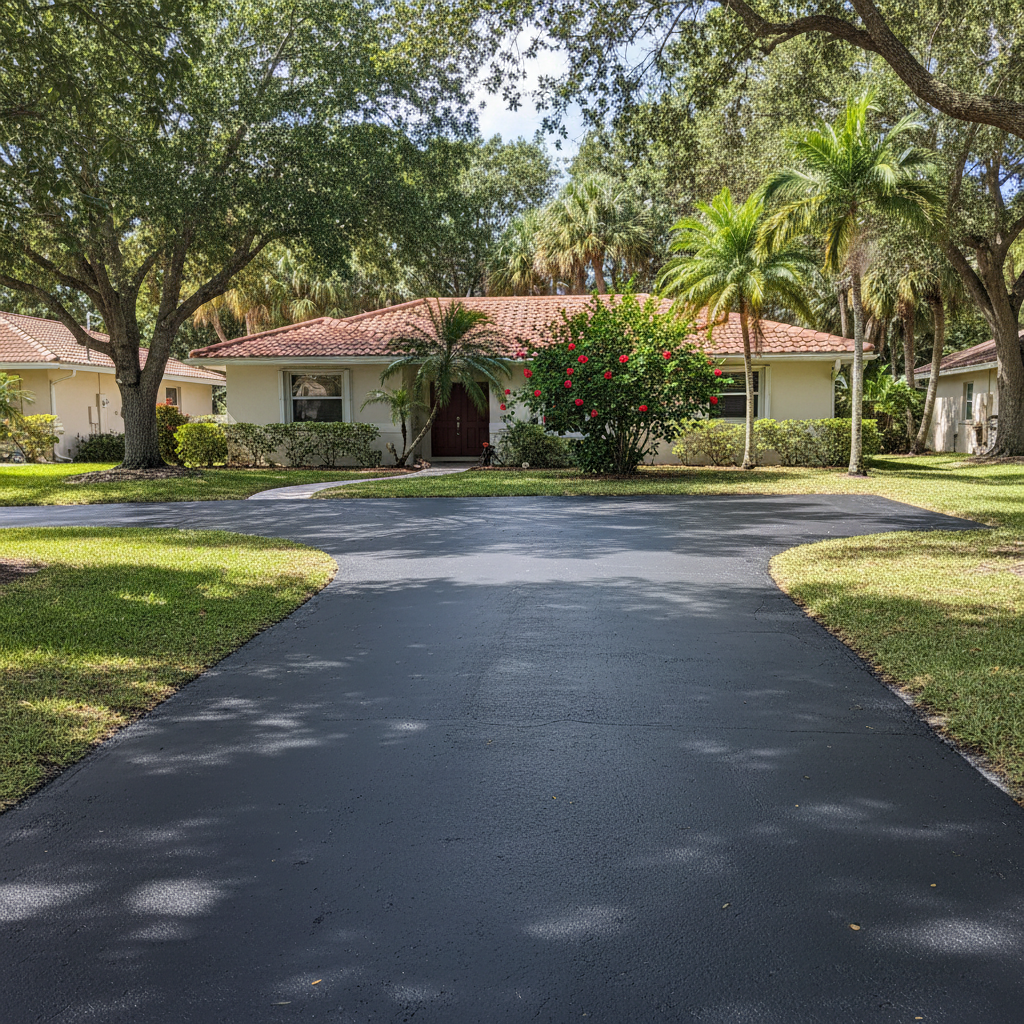
Alright, let's talk sealcoating. It's one of those things that seems simple enough, right? You get a quote, someone comes out, spreads some black stuff, and boom, your driveway looks new. But I'm telling you, I've been doing this for years here in St James City, and I see the same mistakes pop up again and again. These aren't just little oopsies; they can lead to a driveway that looks worse than before, or worse, needs a whole new job way sooner than it should.
Not Understanding What Sealcoating Actually Does
This is a big one. Some folks think sealcoating is a magic bullet that'll fix every crack, fill every pothole, and make their old, crumbling driveway look brand new. It won't. Sealcoating is a protective layer, like sunscreen for your asphalt. It helps prevent oxidation from the sun, resists oil and gas spills, and keeps water from seeping into the sub-base. It makes your driveway look sharp and extends its life, but it's not a miracle cure for structural damage. If your driveway has major cracks, potholes, or is falling apart, you need repairs first, maybe even a full asphalt overlay, not just sealcoat. Putting sealcoat over a bad surface is like painting over rust – it looks okay for a bit, but the problem's still there, and it'll come back to bite you.
Hiring the Cheapest Guy with a Bucket and a Brush
Look, I get it. Everyone wants to save a buck. But when it comes to asphalt work, the cheapest bid is almost never the best. There's a reason some guys can quote you a ridiculously low price. They're probably cutting corners. Maybe they're using watered-down material, which means it won't last. Maybe they're not cleaning the surface properly, so the sealcoat won't adhere. Or maybe they're just not insured, and if something goes wrong, you're on the hook. I've seen driveways around the Pine Island Road area that were sealed by these fly-by-nighters, and they're peeling and cracking within months. A good contractor, like us at Top Notch Asphalt Solutions, uses quality materials, proper techniques, and carries insurance. It costs a little more upfront, but it saves you a lot of headache and money in the long run.
Ignoring the Weather and Cure Time
This is critical, especially down here in Southwest Florida. You can't just sealcoat on any old day. The temperature needs to be right – usually above 50°F and rising, with no rain expected for at least 24-48 hours. I've had people call me, eager to get their driveway done, but I tell them we need to wait for the right window. If it's too cold, the sealcoat won't cure properly. If it rains too soon, it'll wash away or leave streaks. And once it's applied, you absolutely have to stay off it. I recommend at least 24 hours for foot traffic and 48-72 hours for vehicles, depending on the specific product and conditions. Trying to drive on it too soon will mess up the finish and reduce its effectiveness. Patience is a virtue here.
Not Asking the Right Questions
Before you agree to anything, you need to be asking questions. Don't be shy. This is your property and your money. Here's what you should be asking:
- What kind of material are you using? (There are different grades and types of sealcoat.)
- How many coats will you apply? (Two thin coats are usually better than one thick one.)
- What's your process for surface preparation? (Cleaning, crack filling, oil stain treatment are all important.)
- Are you licensed and insured? (Always ask for proof.)
- Can you provide references? (A reputable contractor will be happy to.)
- What's your warranty?
If a contractor gets cagey or can't answer these questions clearly, that's a red flag. You want someone who's transparent and confident in their work.
Forgetting About Maintenance
Sealcoating isn't a one-and-done deal for life. It's a maintenance item. Depending on traffic, weather, and the quality of the initial job, you'll typically need to re-seal every 2-4 years. Some folks sealcoat once and then forget about it for a decade. By then, the asphalt has deteriorated so much that a simple re-seal won't cut it anymore, and you're looking at more extensive, costly repairs. Think of it like changing the oil in your car – regular maintenance keeps things running smoothly and extends the life of your investment.
So, there you have it. Don't fall into these traps. Do your homework, ask the tough questions, and make sure you're working with someone who knows what they're doing. Your driveway will thank you for it.